The Power of Conditioning
Reflection 3/5 Old Cow Paths
Listen or read—whatever fits your pace today.
Reflection from the Old Cow Path phase of the Cow Path Model of Change™.
Even
when we begin to see our old cow paths clearly, something in us still leans
toward them. Awareness dawns, yet the familiar pull remains. It can feel
confusing—how can we know better and still return to what limits us? That quiet
tug is not failure; it is conditioning doing its work.
Conditioning is the mind and body’s way of conserving energy and protecting
stability.
Repetition feels safe. Predictability calms the nervous system.
Each
time we think, feel, or act in the same way, a small signal of reassurance
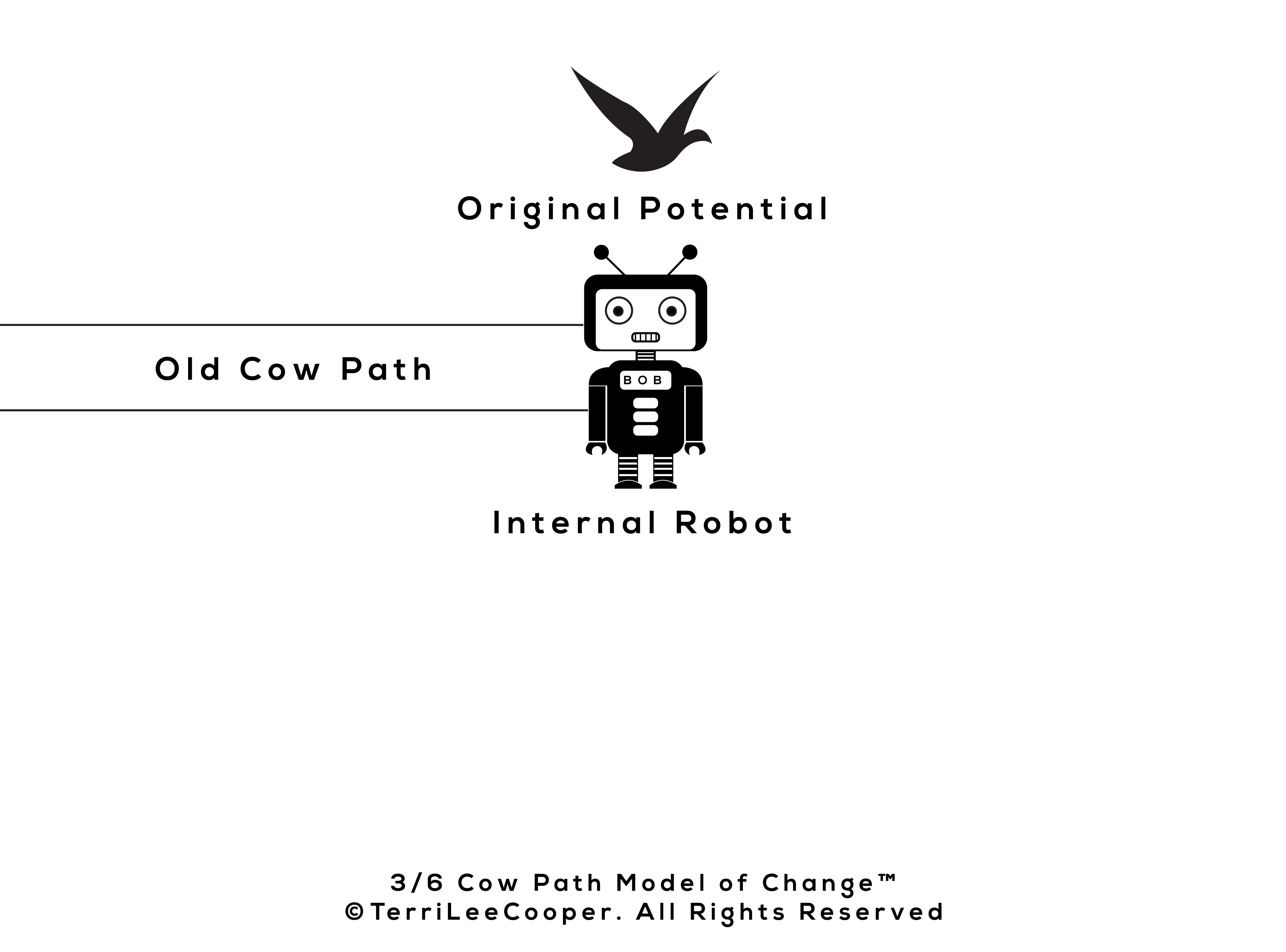
passes through: this is known. Bob, the Internal Robot, lives by that signal.
He does not reason or reflect; he repeats. What is familiar, to him, is what is
right.
This is why we often stay with what hurts.
The body equates “known” with
“safe,” even when the known is exhausting or painful. The ache of repetition
feels steadier than the uncertainty of change. We long for freedom, yet part of
us clings to the fence that defines our pasture. Conditioning holds that fence
in place, not as punishment, but as protection.
As we discussed in the last reflection, at first glance, this looks like habit. But beneath it lies identity.
Conditioning doesn’t just shape what we do; it shapes who we think we are.
Bob
doesn’t merely replay actions—he replays the self that fits them. The story
becomes familiar: "I am this way." The more often the story runs, the truer it feels.
Awareness begins when we can watch that identity form in real time and quietly
whisper, "This, too, is conditioning."
When we see ourselves in a moment of awareness the pull is powerful.
That
instant of noticing interrupts the illusion that the pattern is truth. We may
still walk the old path, but the steps sound different. Awareness inserts space
between the rhythm of repetition and the self who observes it. That small
distance is the beginning of choice.
Gentleness is essential here. Conditioning is ancient and loyal to its
function.
It does not vanish when confronted; it softens when understood. When
we meet Bob with curiosity rather than criticism, we begin to teach the system
that safety can exist inside awareness. We are no longer at war with the
past—we are studying it, much like an amateur social scientist.
Each moment of noticing is a quiet undoing.
The pattern loses a fraction of its authority simply because it has been seen.
Conditioning taught us how to survive.
Awareness begins to teach us how to live.
We are not yet walking new ground, but the pull of the old is no longer absolute. Somewhere within the rhythm of repetition, the first silence of freedom begins to form.
This reflection is part of the Walking the Path Reflection Series. View the full Reflection Series Hub.